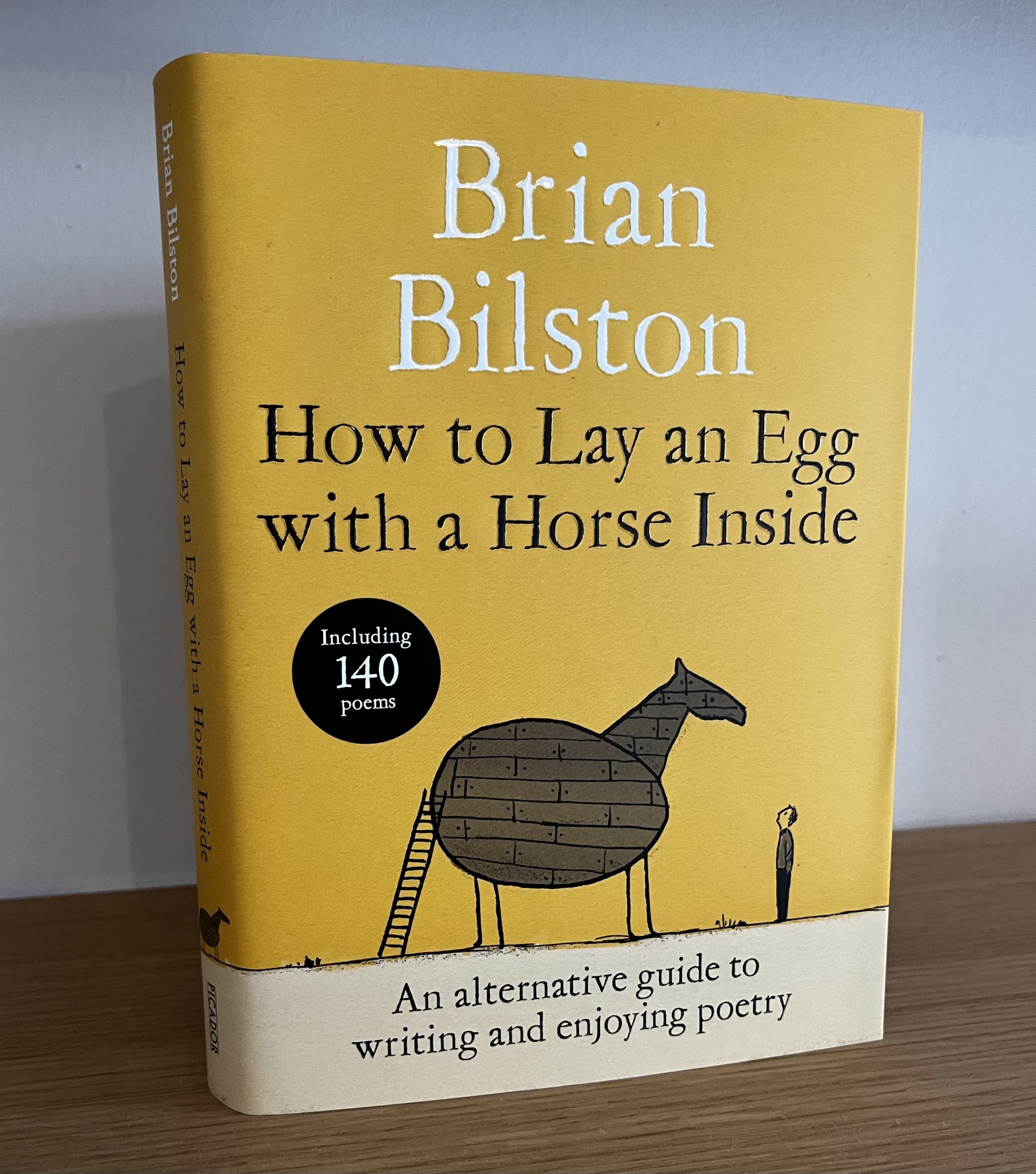
Dead chuffed to have taken delivery today of advance copies of ‘How to Lay an Egg with a Horse Inside’, which comes out next month. As ever, Picador have done a fabulous job in bringing my work to the printed page.
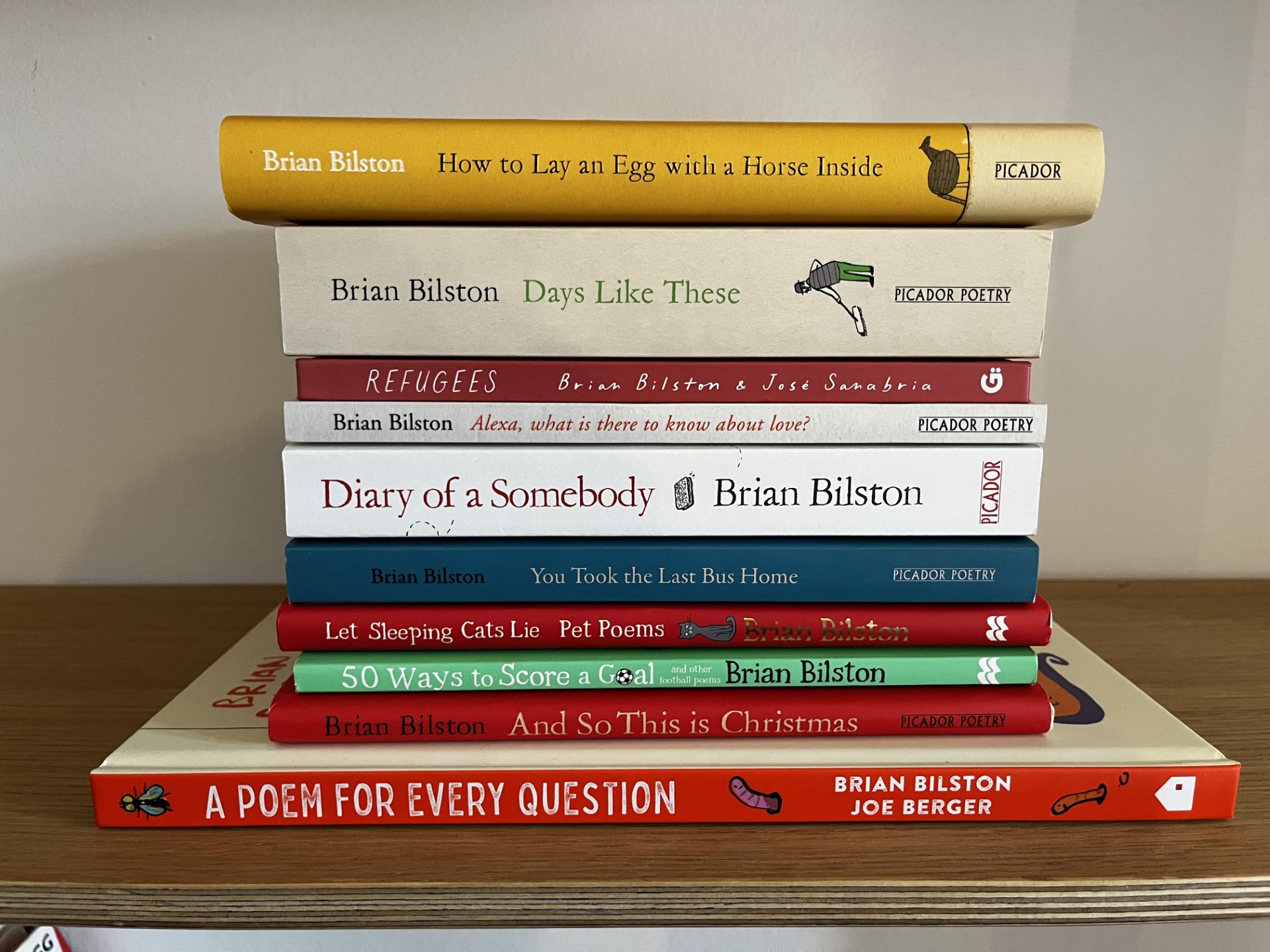
Incredibly, it’s my tenth book. I don’t quite know how that has happened.
Thanks to everyone for having indulged me for so long.
One tour may have just finished but here’s news of another one coming soon …
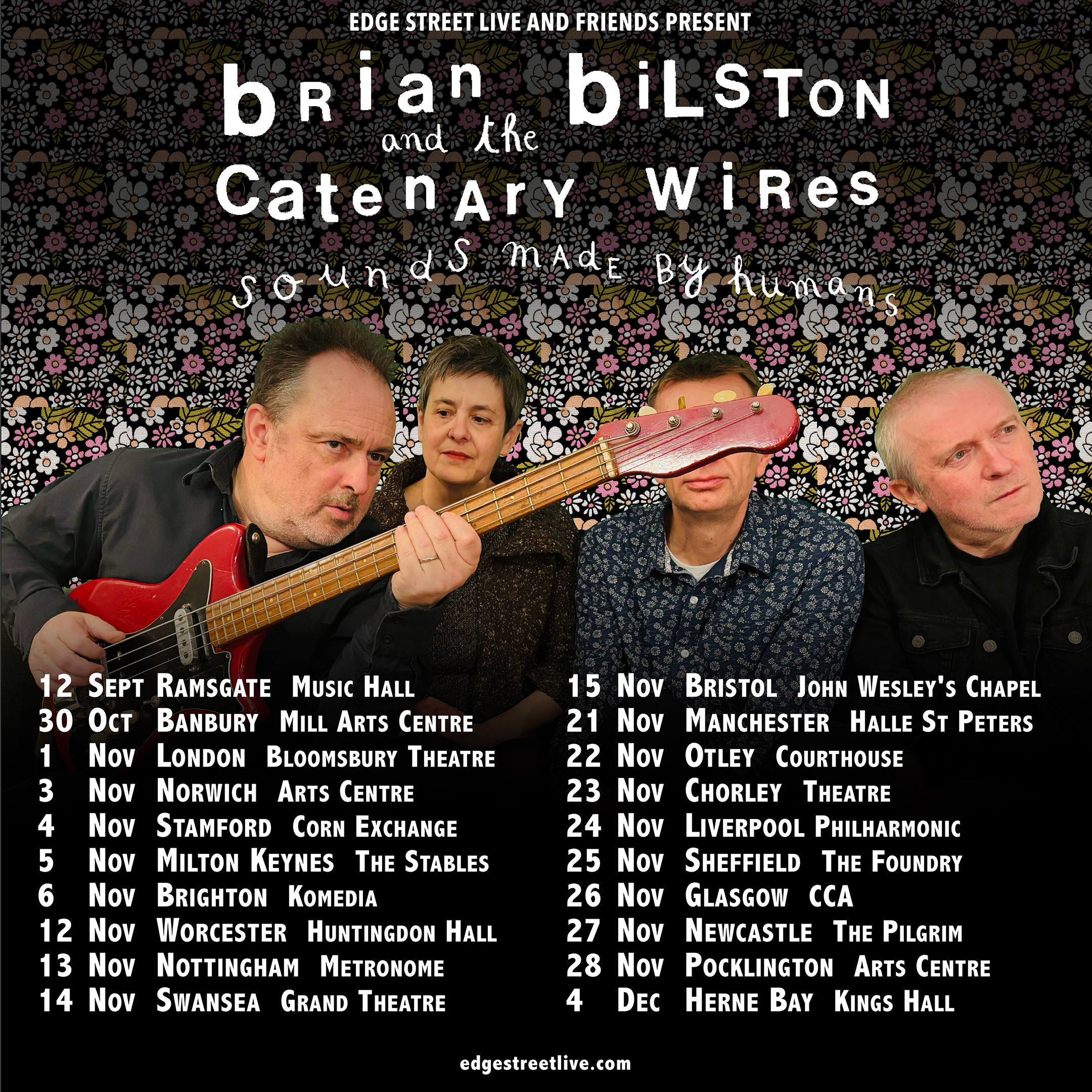
I’m delighted to announce that this autumn I’ll be going on tour with The Catenary Wires, for some fun-filled evenings of music and poetry. We’ll be performing our album ‘Sounds Made by Humans’, and there’ll be poems from me and music from the band throughout the night.
Most of the gigs are in November, with a few either side. We’ll be coming to Banbury, Brighton, Bristol, Chorley, Glasgow, Herne Bay, Liverpool, London, Manchester, Milton Keynes, Newcastle, Norwich, Nottingham, Otley, Pocklington, Ramsgate, Sheffield, Stamford, Swansea, and Worcester.
Tickets have gone on sale this morning. For the full list of shows and links to tickets, you can find them all here:
I’ve been collaborating (well, having fun) with a brilliant band, The Catenary Wires, who have very cleverly put some of my poems to music. The result is an album of thirteen songs to be released on 9th May on Skep Wax Records. It’s called ‘Sounds Made by Humans’.
It can be pre-ordered now on vinyl and CD here: https://linktr.ee/brianbilston and it will also be available for streaming and download.
The LP features some of my most popular poems ‘Alexa, what is there to know about love?’, ‘She’d Dance’, ‘To Do List’, ‘Thou Shalt Not Commit Adulting’, alongside many more timeless, toe-tapping classics.
The album can be pre-ordered now on vinyl and CD, and includes a full colour insert with lyrics, illustrated by Elodie Ginsburg. It will also be available for streaming and download. Some places where you can pre-order:
We’re really proud of it; so much so that there are plans afoot to take it on tour in the UK in November. I’ll share details of those dates with you when confirmed.
*The Catenary Wires are a group comprising Amelia Fletcher, Rob Pursey and Ian Button. Their critically acclaimed third album ‘Birling Gap’ was released in 2021. Since then, they have been focusing on their other bands, playing around the world with Heavenly (icons of the 90s indiepop scene) and Swansea Sound.
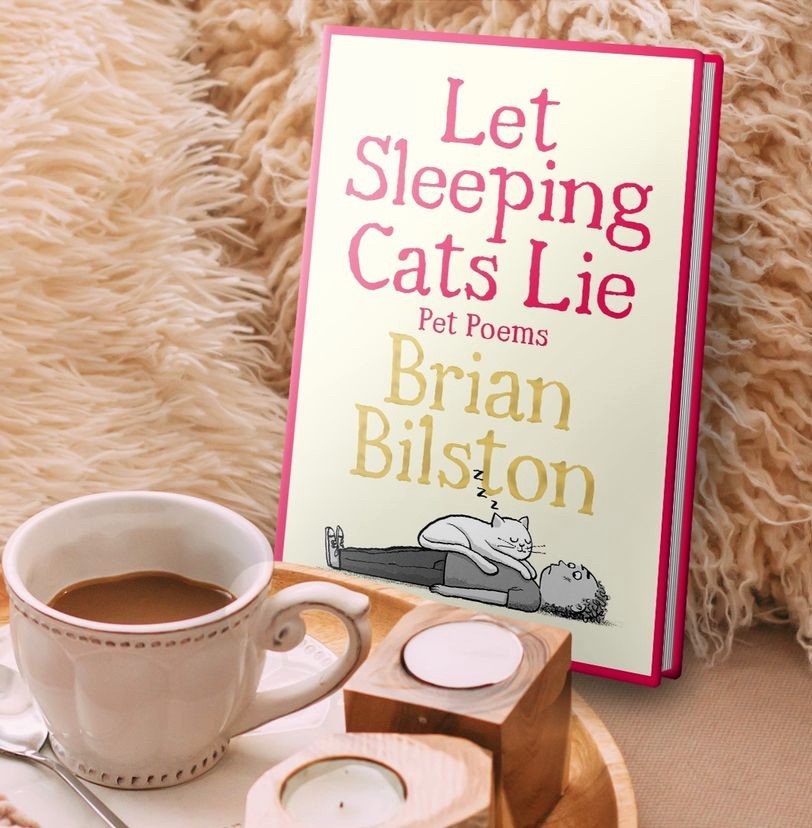
It’s UK publication day for ‘Let Sleeping Cats Lie’, my collection of poems about pets.
I wrote the for book children, aged between 7 and 95, and it’s available through all the usual bookshop places. You can find some of the online retailers here: https://linktr.ee/brianbilston
There are a few signed copies knocking about, too. Here’s a small list of some of the independent bookshops who have signed copies: https://linktr.ee/letsleepingcatslie
Anyway, that’s about all I have to say on the matter so I shall finish writing this post now.
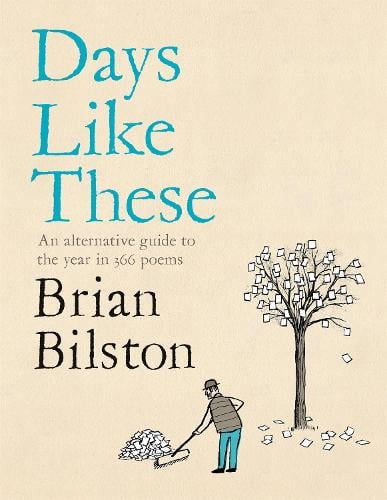
At last! I’m delighted to announce that my most recent book Days Like These is finally available for pre-order in North America. It will officially publish there in hardcover on 5th December and is available through all good bookstores and also Amazon.
It contains a poem for every day of the year, each one inspired by an event associated with that day – from the invention of television to World Bee Day; from the first appearance of Barbie to the banning of flirting in New York; from Independence Day to the first transatlantic phone call.
Subjects I’ve written about along the way include: quarks, morse code, Wittgenstein, bananas, unicorns, the unification of Italy, the Rubik’s Cube, water, Waiting for Godot, the moon, Jane Austen, Esperanto, beer, Doris Day, Lego, kindness, Pluto (the ex-planet not the dog) and Elvis.
Days Like These joins You Took the Last Bus Home, Alexa, what is there to know about love? and Refugees in being available in North America.
Sorry to mention the C word but my book of Christmas poems– And So This is Christmas – which publishes in the UK in October won’t be available in print in North America until next year (presumably to prevent too much excitement happening in any one year).
I’m very excited to announce details of a series of new shows (aka ‘a tour’) taking place this autumn, in which I’ll be reading poems and making shrewd observations about the human condition and/or bin day.
There are around 30 dates and tickets are on sale now. Details & links are here …
Tickets are now available for: Banbury; Belfast; Bellaghy; Bridport; Brighton; Buxton; Cheltenham; Chippenham; Chorley; Clevedon; Colchester; Crickhowell; Frome; Kendal; Liverpool; Lytham St Annes; Milton Keynes; Norwich; Otley; Painswick; Pocklington; Sale; Selby; Sheffield; Stamford; Sudbury; Swindon; Worcester.
Caerphilly and Deal will be on sale soon.
I’ll also be at various festivals from the late Spring onwards. More on that, when I have all the details.
Finally, this month I’ll be at the Laugharne Weekend in Carmarthenshire, (24-26th March) and then in Newcastle on 28th. Tickets are still available for both.
I convened an academic symposium
and gathered together the great and the good
from a wide variety of disciplines
to consider the question, ‘What is love?’
The philosophers said we must first start with Plato.
The historians showed how it had changed over time.
The chemists spoke of oxytocin and dopamine.
The psychologists thought it was all in the mind.
The political scientists declared it undemocratic.
The sociologists deemed it a social construct.
The economists said that nothing else mattered
except for how little there was, or how much.
The linguists explained the word came from Old English.
The theologians claimed it came straight from God.
The media studies professors weren’t present
but they said they’d send their thoughts in a vlog.
The anthropologists spoke of love across cultures.
The mathematicians tried to work out its square root.
The neuroscientists pointed at MRI scans.
The musicologists played its song on a lute.
The art historians said it was all about perspective.
The geologists believed it from molten rock hewn.
The classicists read extracts from Sappho and Ovid.
The astrophysicists thought it to do with the moon.
The geographers tried to map all its contours.
The literature scholars quoted Auden and Keats.
At the end we were no nearer an answer;
we reconvene on Wednesday next week.
‘Let’s jump off this cliff – it’ll be fun! A right laugh!’
urged all the people (well, I mean just over half
of those who had bothered to speak up at all).
I peered down at the rocks; it was a long way to fall.
I said, ‘This cliff’s more than three hundred feet high
and my doctor tells me if I jump I will die.’
‘Cliff-jumping’s fine!’ they said. ‘Don’t trust doctors, trust us!
We read all about it on the side of a bus.’
Worried, I met up with my local MP.
I shared my concerns. He was forced to agree:
‘Why the rocks below would smash you to bits!
Where did you get this idea of jumping off cliffs?’
‘It was the will of some of the people,’ I said
and his expression changed to another instead.
‘I think,’ he revised, ‘you’re being melodramatic.
The problem is you. You’re undemocratic.’
On the clifftop, we waited. In silence we stood.
Then a voice: ‘Remind me, why is cliff-jumping good?’
But we looked down at our shoes, baffled and stumped.
Then, out of embarrassment, we held hands and jumped.